




Working Principle of a Hydraulic Breaker
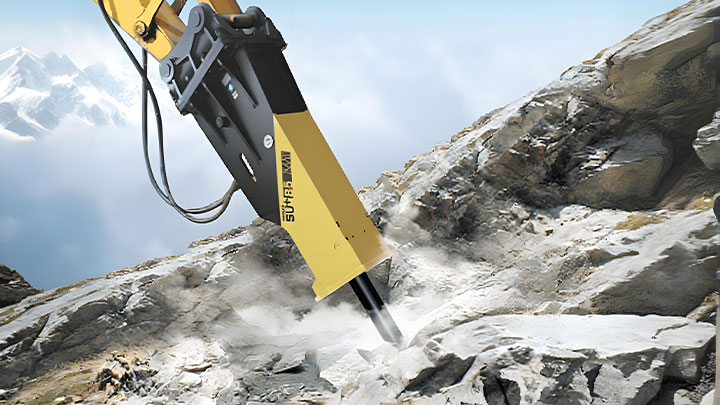
A hydraulic breaker, also known as a hydraulic hammer, is a powerful attachment widely used in construction, mining, quarrying, and demolition industries. It is commonly mounted on excavators, skid steers, or backhoe loaders and is designed to break hard materials such as rock, concrete, asphalt, and reinforced structures. The working principle of a hydraulic breaker is based on converting hydraulic energy into high-frequency mechanical impact energy, enabling efficient and controlled crushing of tough materials.
At the core of a hydraulic breaker is a hydraulic system that supplies pressurized oil from the carrier machine, typically an excavator. This hydraulic oil enters the breaker through high-pressure hoses and flows into the breaker’s internal chambers. The main components inside the breaker include a hydraulic cylinder, a piston, a control valve, an accumulator, and a working tool such as a chisel or moil point. Each component plays a critical role in ensuring stable operation and effective energy transfer.
When the hydraulic breaker is activated, pressurized hydraulic oil is directed by the control valve into the upper chamber of the cylinder, pushing the piston downward. As the piston accelerates, it stores kinetic energy. At the end of its downward stroke, the piston strikes the top of the tool with great force. This impact energy is then transmitted through the tool tip directly to the target material, causing cracks and fractures. Repeated high-energy impacts gradually break the material into smaller pieces.
After the piston completes its downward stroke, the hydraulic system reverses the oil flow. The control valve redirects hydraulic oil to the lower chamber of the cylinder, lifting the piston back to its original position. This upward movement prepares the piston for the next impact cycle. The rapid alternation between downward and upward strokes allows the breaker to deliver dozens or even hundreds of blows per minute, depending on the breaker design and hydraulic flow rate.
A key component that enhances the performance of a hydraulic breaker is the accumulator. The accumulator is typically filled with nitrogen gas and acts as an energy storage device. During operation, part of the hydraulic energy compresses the gas inside the accumulator. This stored energy is then released during the piston’s downward stroke, increasing impact force and improving efficiency. The accumulator also helps absorb pressure fluctuations, protecting the hydraulic system from shock loads and extending the service life of the breaker.
The tool, which directly contacts the material being broken, is another essential element of the working principle. Different tool shapes are selected based on application requirements. For example, chisels are suitable for general concrete breaking, while moil points are ideal for hard rock and precision demolition. The tool must be properly lubricated and firmly supported by bushings to minimize wear and ensure accurate energy transfer from the piston.
The effectiveness of a hydraulic breaker depends not only on its internal mechanism but also on correct operating conditions. Proper hydraulic pressure, flow rate, and oil cleanliness are crucial for stable performance. Insufficient pressure reduces impact energy, while excessive pressure can cause overheating and component damage. In addition, maintaining the correct working angle and applying consistent downward force from the carrier machine help maximize breaking efficiency and prevent abnormal tool wear.
In conclusion, the working principle of a hydraulic breaker relies on the conversion of hydraulic power into repeated mechanical impacts through a precisely controlled piston mechanism. By combining high-pressure hydraulic oil, rapid piston movement, energy storage via an accumulator, and specialized tools, hydraulic breakers deliver strong, reliable, and efficient breaking performance. This principle makes them indispensable equipment for modern construction, demolition, and mining operations, where high productivity and precise material control are essential.
Tags: